Global South scholars call for decolonizing English curricula, multilingual teaching reforms
Academics from Pakistan and abroad on Wednesday called for urgent reforms in English language teaching, recommending the inclusion of regional literatures, multilingual classroom practices and critical pedagogy to decolonize English studies and make them relevant to societies of the Global South.
The recommendations were presented during the IELL Research Symposium 2026 organized by the Institute of English Language and Literature (IELL), University of Sindh, Jamshoro, under the theme “Reimagining English Studies through Southern Praxis.” The hybrid symposium was held at the Shaikh Ayaz Auditorium, Faculty of Arts and brought together scholars, researchers and students to discuss new directions in English studies.
The inaugural session was chaired by Vice-Chancellor Fateh Muhammad Marri, who emphasized the need to rethink the teaching and research of English from perspectives rooted in local cultures and experiences.
Dr Marri said English should no longer be treated merely as a colonial legacy but as a global language that must be understood and taught within the social and cultural realities of societies where it is used. He stressed that universities in the Global South must produce knowledge reflecting their own histories and intellectual traditions rather than simply reproducing Western frameworks.
He said research in English studies should explore indigenous narratives, regional literatures and local histories so that global academic discourse might become more balanced and inclusive. The vice-chancellor also stressed that students should be encouraged to critically analyze texts and theories while grounding their interpretations in their own cultural contexts.
He noted that international academic engagement through symposiums and conferences could help Pakistani scholars contribute more effectively to global debates in literature and language studies.
Director IELL Tarique Hasan Umrani said the concept of Southern Praxis encouraged scholars to rethink English studies through the intellectual traditions and lived experiences of societies in Asia, Africa and Latin America.
He observed that English departments should broaden their curricula by incorporating regional voices and diverse critical approaches instead of relying exclusively on Western literary canons. According to him, academic collaboration among universities of the Global South could open new avenues for research and pedagogy in English studies.
Dr Umrani added that interdisciplinary approaches and digital technologies were creating new possibilities for linking literature with cultural studies, media studies and social sciences. He emphasized that young scholars should be trained to question dominant narratives and develop research reflecting the realities of multilingual societies.
Keynote speaker Hassan Syed from IBA University Sukkur said English language teaching must move beyond imitation of native-speaker norms and focus instead on communicative competence relevant to local contexts. He emphasized that students should see English as a tool for global dialogue rather than as a marker of cultural hierarchy.
He suggested that curricula should incorporate South Asian literature written in English so students could recognize their own societies and histories within academic texts. He also stressed the need for teaching methods that encourage critical thinking, research skills and intellectual independence among learners.
Another keynote speaker Dr Javaria Farooqui from COMSATS University Islamabad said decolonizing English education required recognizing linguistic diversity and cultural plurality in classrooms. She stressed that inclusive teaching methods could empower students from different linguistic backgrounds.
Dr Farooqui said that literary traditions of the Global South offered rich intellectual resources that could significantly enrich English studies. She emphasized the importance of critical pedagogy in helping students analyze power relations embedded in language, literature and knowledge production.
Among the featured speakers, Elhadi Moussa Ben Moussa from the University of East London highlighted the importance of transnational academic cooperation among universities in Africa, Asia and Europe. He said collaborative research could create alternative intellectual networks beyond traditional Western centres of knowledge.
He suggested that students should be exposed to comparative literature from different regions of the Global South to better understand shared historical and cultural experiences.
Nukhabah Taj Langah from University of Malaya, Kaula Lumpur said that language teaching must incorporate cultural awareness and social context to remain meaningful for students. She said postcolonial and feminist perspectives from the Global South should occupy a central position in English curricula.
Dr Langah observed that regional scholarship often remains underrepresented in global academic publishing and called for greater institutional support for research highlighting marginalized voices.
Meanwhile, Benachour Saidi hailing from Mohamad First University Morocco said English studies must address the realities of multilingual societies across Africa and Asia. He described English as a bridge language capable of facilitating intercultural dialogue.
He further said that literature from the Global South provided important insights into colonial history, identity formation and cultural resistance. He stressed the need to develop students’ critical reading skills so they could interpret texts from diverse perspectives.
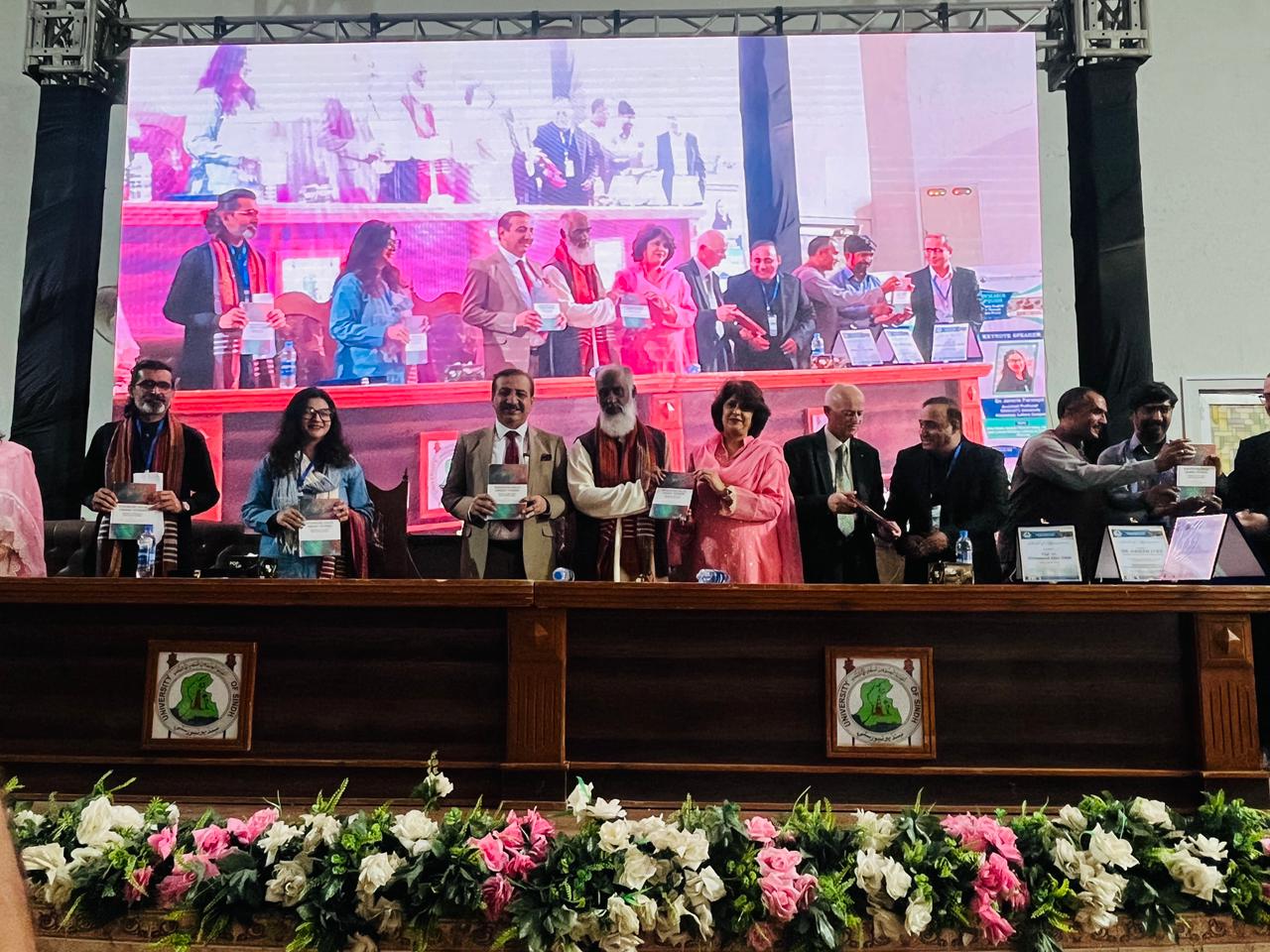
The symposium also featured the launch of a book titled Decolonizing English Language Textbooks: English in a South-North Inter-Epistemic Dialogue, written by scholars from different academic institutions.
Participants concluded that reforms in English language teaching including curriculum diversification, multilingual pedagogy, interdisciplinary research and stronger international collaboration among Global South universities were essential to making English studies more inclusive, relevant and globally representative.