SU’s Board of Studies backs plan to upgrade Fisheries Department into ‘Institute of Aquaculture, Fisheries and Aquatic Sciences’
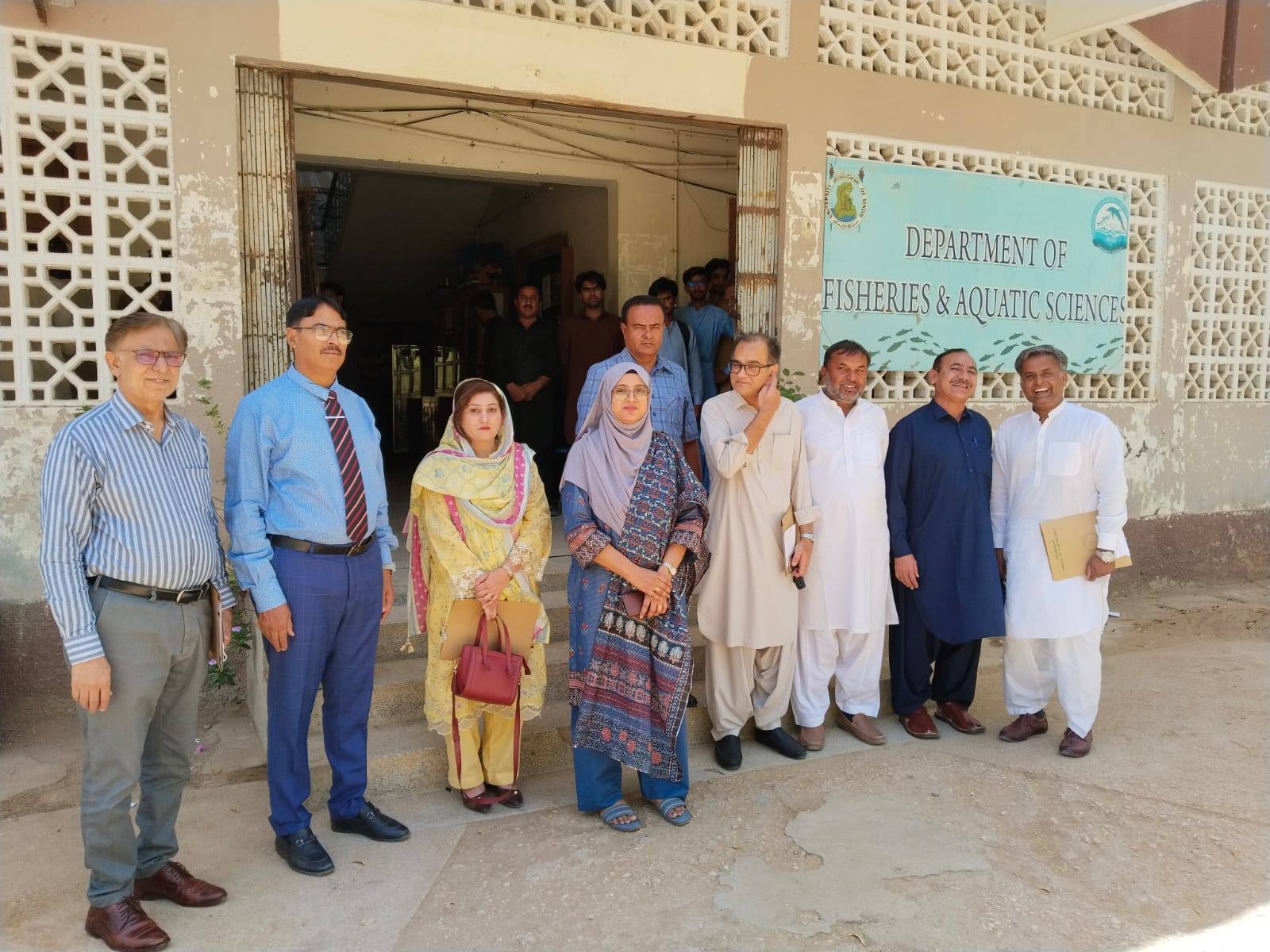
The Department of Fisheries and Aquatic Sciences, University of Sindh convened a meeting of its Board of Studies on Tuesday to deliberate on academic development, curriculum reforms and the future expansion of the discipline.
The chairman of the department Professor Dr Khalid Hussain Lashari chaired the meeting, who welcomed the invited experts and faculty members. He appreciated their participation in strengthening academic planning and research in fisheries and aquatic sciences.
The proceedings began with the recitation of the Holy Quran by Dr Baradi Waryani. The invited experts included Dr Aslam Jarwar, Dr Abdul Latif Korai, Dr Sher Khan Panhwer and Dr Shaista Jalbani alongside the faculty members including the well-known researcher Prof Dr Mukhtiar Ahmed Mahar, Dr Muhammad Younis Leghari, and Dr Hameeda participated in the meeting.
During the session, members discussed several academic matters aimed at improving the department’s teaching and research framework. The Board endorsed the introduction of new courses titled Faham-ul-Quran and Pakistan Studies, describing them as important additions for strengthening students’ understanding of ethical values, national identity and social responsibility alongside professional education.
Participants also reviewed and approved the panel of subject experts responsible for the evaluation of M.Phil and PhD scholars, ensuring academic quality in postgraduate research.
In a key development, the members unanimously proposed the up-gradation of the department into a full-fledged institute to be named the Institute of Aquaculture, Fisheries and Aquatic Sciences. The proposal, they said, would help expand research capacity, strengthen specialized training and promote interdisciplinary collaboration in fisheries, aquaculture and aquatic resource management.
During the discussion, experts emphasized the growing importance of fisheries and aquaculture in addressing food security challenges and supporting sustainable livelihoods. They noted that academic institutions had a crucial role in developing innovative research, promoting environmentally responsible practices and ensuring safe and sustainable aquatic food production.
The meeting concluded with a vote of thanks delivered by the secretary Board of Studies Dr Muhammad Younis Leghari, who acknowledged the valuable input of the experts and faculty members. He expressed hope that the decisions taken would contribute to the further development of the discipline at the university.